Youth Civic Projects Are Turning Local Ideas Into Public Skills
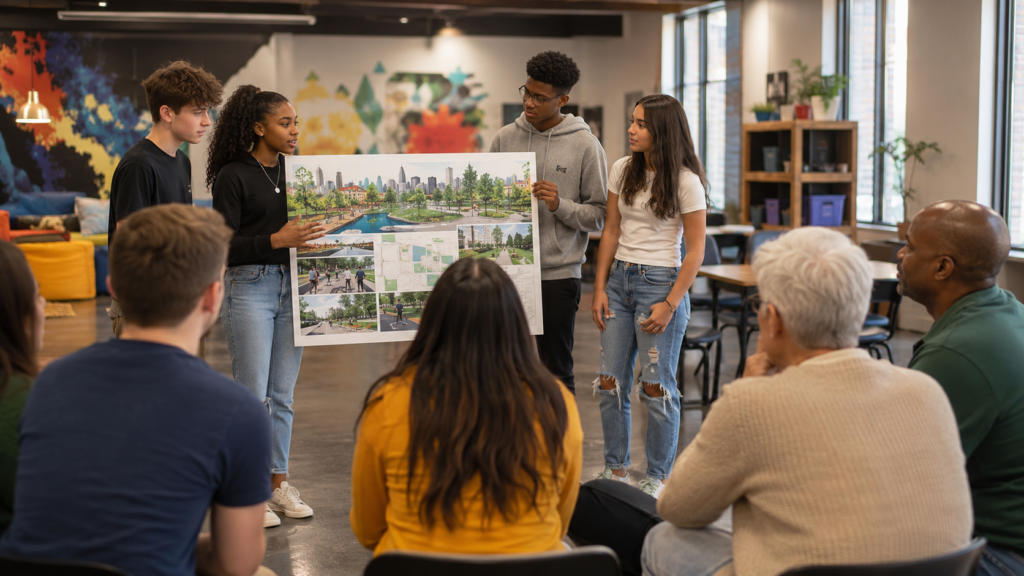
Youth civic projects give teenagers a structured way to investigate neighborhood problems and propose realistic improvements. Participants may study unsafe crossings, park access, recycling, public art, or library hours. The goal is not merely to collect youthful opinions, but to teach research, teamwork, budgeting, and public communication through work with visible local consequences.
Strong programs begin with questions young people help choose. Mentors show teams how to interview residents, examine public data, map observations, and separate evidence from assumptions. Students learn that a popular idea still needs a responsible agency, a budget, a maintenance plan, and consideration of people who may experience the issue differently.
Projects become concrete when teams create a proposal and present it to decision makers. A group might compare lighting locations, estimate costs, design a survey, or test a temporary event. Feedback sessions teach participants to revise their claims, answer difficult questions, and explain tradeoffs without treating disagreement as personal rejection.
Adult mentors provide technical knowledge while leaving genuine decisions to the participants. Schools, youth centers, planners, artists, and local businesses can contribute expertise or meeting space. Recruitment should extend beyond high-achieving students already comfortable with leadership, with transportation, accessibility, meals, and translated information available where needed.
Simple digital tools support mapping, surveys, shared documents, and presentations. Participants also need guidance on verifying sources, protecting interviewees, and avoiding publication of personal information. Permission procedures, safe meeting practices, and clear rules for photography are essential when projects involve minors or public events.
Tokenism is the main danger. Young people quickly recognize when officials invite them for a photograph but ignore their work. Programs should publish what was accepted, rejected, or delayed and explain why. Small implementation funds and named agency contacts make participation credible, while safeguarding rules prevent pressure on students to become public spokespeople.
Even proposals that are not adopted can produce valuable skills if the process is honest. Participants gain experience with evidence, deadlines, compromise, and institutions. Communities gain observations that adults may overlook. Long-term programs track whether projects are maintained and whether former participants continue contributing in school, work, or neighborhood life.
For institutions interested in youth civic projects, the most useful first step is a limited project with clear goals and public evaluation. Feedback from participants, transparent methods, and published results make improvement easier before expansion. Review should include accessibility, staff workload, privacy, maintenance, and long-term costs, not only early performance figures. Those measures reveal whether a promising idea continues to solve a real public problem after attention around its launch has faded.