What Independent Environmental Sampling Can and Cannot Prove
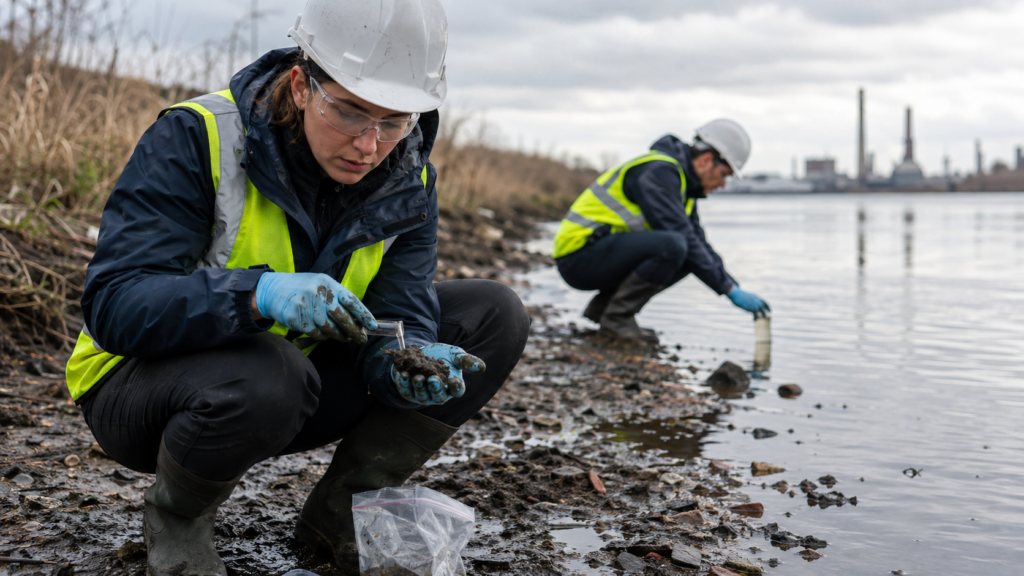
Independent environmental sampling can clarify concerns about soil, air, or water near industrial and construction sites, but a single result rarely tells the whole story. Investigators need a documented method, qualified laboratories, and comparison data before drawing conclusions about sources, exposure, or public health.
A sampling plan identifies the question first. Teams choose locations upstream and downstream, collect at appropriate depths, record weather, and use clean containers. Control samples help reveal contamination introduced during handling. Without this planning, a dramatic number may reflect the wrong place, season, or laboratory procedure.
Certified laboratories test for specified substances and report detection limits, uncertainty, and quality controls. Investigators compare results with legal standards and scientific guidance, which may serve different purposes. A regulatory threshold is not automatically a boundary between complete safety and immediate harm.
Residents often provide essential knowledge about odors, flooding, dust, and historic land use. Their observations can guide sampling, but they do not replace measurement. Companies and public agencies should receive the methods and results and have an opportunity to explain operations or provide additional data.
Geographic information systems map samples alongside drainage, property, and wind patterns. Chain-of-custody forms document who handled each container. Repeat sampling tests whether a finding persists, while independent review helps catch errors in units, location, or interpretation.
Environmental conditions vary continuously. Rain can dilute one substance while carrying another into a river. Pollutants may come from several sources. Investigators should avoid implying a direct cause without evidence and must protect private property and personal health information collected during interviews.
Strong environmental investigations are transparent enough to be repeated. They publish locations, dates, methods, and limits while explaining uncertainty in plain language. The goal is not to create fear but to produce evidence that regulators, communities, and operators can use for informed decisions.
For institutions interested in environmental sampling, the most useful first step is a limited project with clear goals and public evaluation. Feedback from participants, transparent methods, and published results make improvement easier before expansion. Review should include accessibility, staff workload, privacy, maintenance, and long-term costs, not only early performance figures. Those measures reveal whether a promising idea continues to solve a real public problem after attention around its launch has faded.