Public Planning Meetings Are Evolving Beyond the Open Microphone
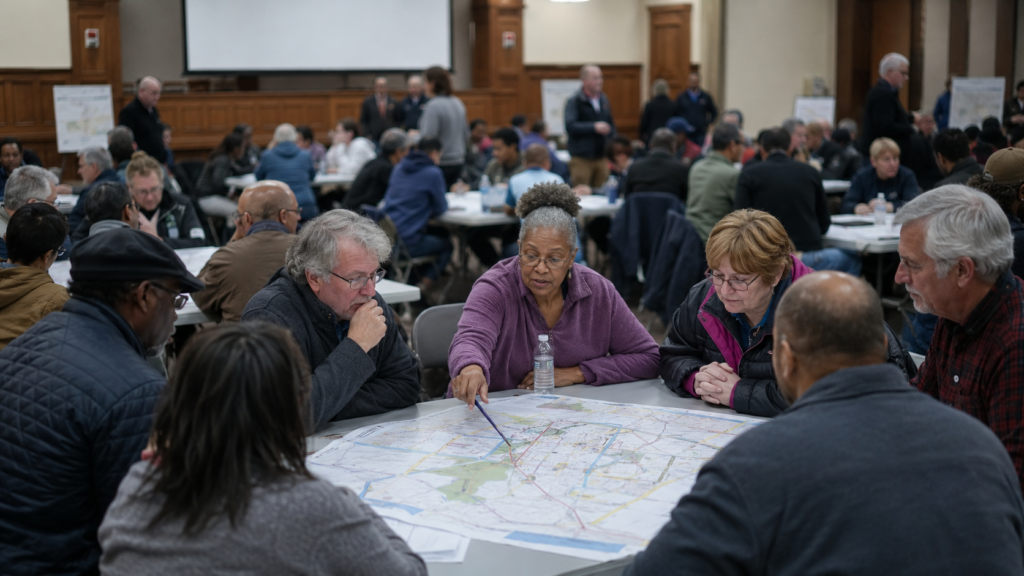
Public planning meetings are moving beyond a single evening microphone where each resident receives two minutes to speak. Cities are adding workshops, small-group maps, online surveys, walking tours, and multilingual sessions. These formats can reveal practical knowledge that formal hearings often miss.
Traditional hearings remain important for the legal record, but they favor people comfortable with public speaking and available at a specific time. Parents, shift workers, young residents, and people with disabilities may be absent. Multiple participation channels make the process broader without eliminating accountable public decisions.
Effective workshops ask focused questions and show the constraints honestly. Residents may compare street designs, identify unsafe crossings, or rank community needs. Facilitators record disagreements rather than forcing artificial consensus. Agencies later publish what they heard and explain which suggestions changed the proposal.
Trust depends on reaching communities before a plan is nearly final. Local groups can host sessions in familiar places and help translate technical language. Participants should know who will decide, what budget exists, and which issues are outside the project so expectations remain realistic.
Interactive maps and digital comment platforms organize large volumes of input. Paper maps, telephone options, and staffed tables remain necessary. Agencies remove duplicate submissions carefully and protect addresses or contact details while retaining enough information to understand geographic patterns.
Participation can become symbolic if officials collect comments without responding. Organized groups may dominate, and online campaigns can create misleading volume. Transparent summaries, demographic checks, independent facilitation, and clear decision criteria help distinguish broad public priorities from repeated messages.
No meeting design removes political conflict, nor should it. Good participation makes choices and tradeoffs visible before final approval. When residents can trace how evidence and public input shaped a decision, planning becomes easier to evaluate even for people who disagree with the outcome.
For institutions interested in participatory planning, the most useful first step is a limited project with clear goals and public evaluation. Feedback from participants, transparent methods, and published results make improvement easier before expansion. Review should include accessibility, staff workload, privacy, maintenance, and long-term costs, not only early performance figures. Those measures reveal whether a promising idea continues to solve a real public problem after attention around its launch has faded.